
Under-Eye Filler vs. Eyelid Surgery: How to Know Which One You Actually Need
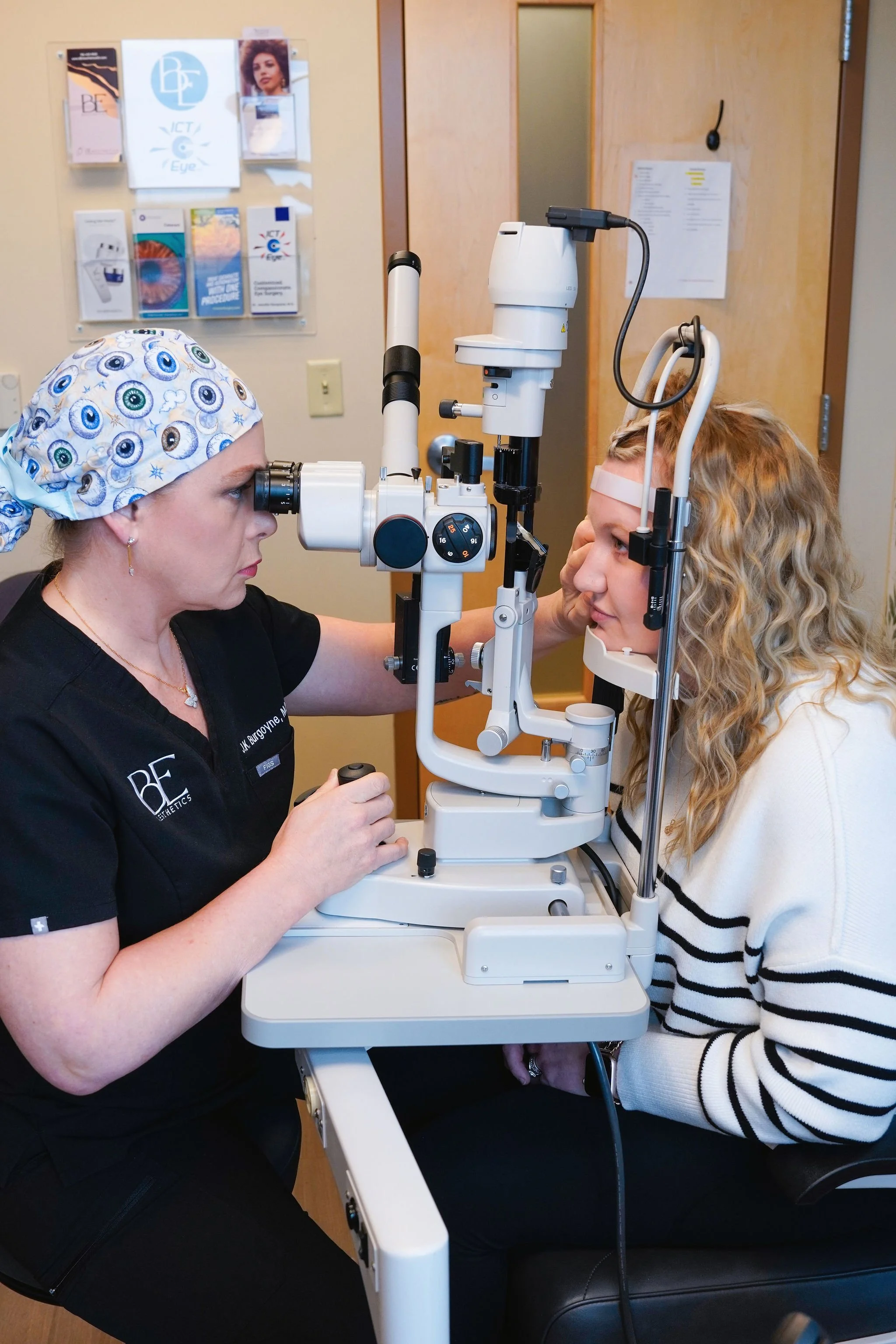
If you look in the mirror and feel like your eyes make you look tired, older, or constantly exhausted, you’re not alone.
The under-eye area is one of the first places where aging shows. Patients often notice:
Dark circles
Hollow or sunken under-eyes
Puffiness or bags
Loose or sagging eyelid skin
Many people assume the solution is under-eye filler, while others wonder if eyelid surgery (blepharoplasty) might be the better option.
The truth is: the right treatment depends entirely on your anatomy.
At BE Aesthetics in Wichita, the team carefully evaluates the under-eye area to determine whether dermal filler or surgical correction will provide the most natural and long-lasting results.
Understanding the difference can help you make a more informed decision about refreshing your appearance.
Why the Under-Eye Area Ages So Quickly
The eye area is incredibly delicate. The skin is thinner here than almost anywhere else on the face.
Over time, several changes occur simultaneously:
Volume loss in the tear trough
Fat shifting or bulging beneath the eyes
Skin laxity or thinning
Changes in bone structure
These changes can create the classic “tired eye” appearance, even when you feel well rested.
Treatments like dermal fillers and eyelid surgery both aim to correct these concerns—but they work in very different ways.

When Under-Eye Filler Is the Right Choice
Under-eye filler (also called tear trough filler) is a non-surgical treatment that restores volume beneath the eyes.
Dermal fillers are typically made from hyaluronic acid, a substance naturally found in the body that helps retain moisture and support the skin.
The purpose of filler in the under-eye area is simple:
Fill hollow areas so the transition between the lower eyelid and cheek becomes smoother.
You May Be a Good Candidate for Under-Eye Filler If:
Your under-eyes look sunken or hollow
Dark circles are caused by volume loss
You have minimal skin laxity
You want a non-surgical option
Your concerns are relatively mild to moderate
When used appropriately, under-eye filler can:
Smooth the tear trough
Reduce the appearance of dark shadows
Create a more refreshed appearance
Restore youthful facial balance
Because filler is non-surgical, it also offers benefits like:
Minimal downtime
Quick treatment sessions
Immediate visible improvement
At BE Aesthetics, injectable treatments like dermal fillers are carefully customized to each patient’s anatomy to ensure natural-looking results.
The Limitations of Under-Eye Filler
While filler can be extremely effective for the right candidate, it cannot fix every under-eye concern.
Dermal fillers do not remove excess skin or fat.
This means filler may not improve issues like:
Significant under-eye bags
Loose or sagging eyelid skin
Puffiness caused by fat pads
Structural eyelid problems
In these cases, adding filler may actually make the area appear heavier instead of more refreshed.
This is why proper evaluation by an experienced provider is so important.

When Eyelid Surgery Is the Better Solution
For some patients, the most effective solution is blepharoplasty, also known as eyelid surgery.
Blepharoplasty is designed to correct structural issues around the eyes by:
Removing excess skin
Repositioning or removing fat deposits
Tightening underlying tissue
At BE Aesthetics in Wichita, eyelid surgery is a specialized focus of the practice, helping patients restore a more youthful and rested appearance with natural-looking results.
Eyelid Surgery May Be Recommended If You Have:
Persistent under-eye bags
Loose or sagging skin
Puffiness caused by fat pads
Hooded upper eyelids
Eyes that appear tired even after rest
Unlike filler, eyelid surgery addresses the root cause of the problem, not just the appearance.
The result is often a long-term improvement that can last many years.
How Anatomical Evaluation Determines the Right Treatment
The most important step in deciding between filler and surgery is a detailed anatomical evaluation.
At BE Aesthetics, treatment recommendations are based on:
Facial structure
Skin quality
Fat distribution around the eyes
Degree of volume loss
Overall facial balance
This approach ensures that patients receive the treatment that actually solves the problem, rather than simply masking symptoms.
Dr. Burgoyne, the founder of BE Aesthetics, brings more than 25 years of experience in eye surgery and facial aesthetics, allowing for highly precise evaluations of the eye area.
Because the eyes are such a complex anatomical region, specialized expertise is essential when choosing the right treatment plan.

Why Some Patients Need a Combination Approach
In many cases, the most natural results come from combining treatments.
For example:
Eyelid surgery may remove excess skin or fat
Dermal filler can restore subtle volume around the eyes
Botox may soften crow’s feet
This comprehensive approach can create a refreshed appearance while still maintaining natural facial expression.
At BE Aesthetics, treatment plans are fully customized to each patient’s goals and anatomy.
Why Expertise Matters for Under-Eye Treatments
The under-eye area is one of the most technically challenging areas to treat in facial aesthetics.
Poorly placed filler can lead to:
Swelling
Puffiness
Visible filler
An unnatural appearance
Similarly, eyelid surgery requires a deep understanding of eye anatomy, muscle structure, and fat distribution.
That’s why choosing an experienced provider is critical.
At BE Aesthetics in Wichita, patients benefit from a team that specializes in both injectables and surgical eye rejuvenation, allowing for comprehensive treatment planning.
This dual expertise ensures that patients receive the most appropriate treatment, not just the most convenient one.
Frequently Asked Questions
Is under-eye filler better than eyelid surgery?
Neither treatment is universally better. Under-eye filler works best for volume loss, while eyelid surgery is more effective for excess skin or fat deposits.
How long does under-eye filler last?
Most hyaluronic acid fillers last 9–18 months, depending on the product and the individual’s metabolism.
Is eyelid surgery permanent?
While the aging process continues, results from blepharoplasty can last many years, making it one of the most long-lasting facial rejuvenation procedures.
How do I know which treatment I need?
The best way to determine the right treatment is through a professional consultation and anatomical evaluation with an experienced provider.

Refresh Your Eyes With Expert Care in Wichita
If your eyes make you look tired, older, or less refreshed than you feel, the right treatment can make a dramatic difference.
At BE Aesthetics in Wichita, patients receive personalized treatment plans based on detailed evaluation of the eye area, ensuring natural, balanced results.
Whether the solution is under-eye filler, eyelid surgery, or a combination of treatments, the goal is always the same:
Help you look like the best, most refreshed version of yourself. Schedule a consultation today.