
Droopy Eyelids: Is It Ptosis, Excess Skin, or a Low Brow?
Droopy or heavy upper eyelids most often come from one or more of three causes:
Ptosis: the eyelid itself sits too low.
Excess eyelid skin (dermatochalasis): loose skin folds over an eyelid that sits at a normal height.
Brow descent: a lowered brow crowds the eyelid from above.
The distinction matters because each cause is corrected differently. Ptosis repair addresses the muscle and tendon that lift the eyelid. Blepharoplasty removes excess skin and sometimes fat. Brow descent is addressed at the brow itself. If the procedure doesn't match the cause, the heaviness can remain after surgery.
Many patients have more than one of these at once. At BE Aesthetics in Wichita, eyelid concerns are evaluated by Dr. Jennifer Burgoyne, M.D., a Board-Certified Ophthalmologist who has practiced in Wichita since 2001 and specializes in surgical eye care and eyelid procedures. Her evaluation considers how the eyelid functions, not only how it looks.
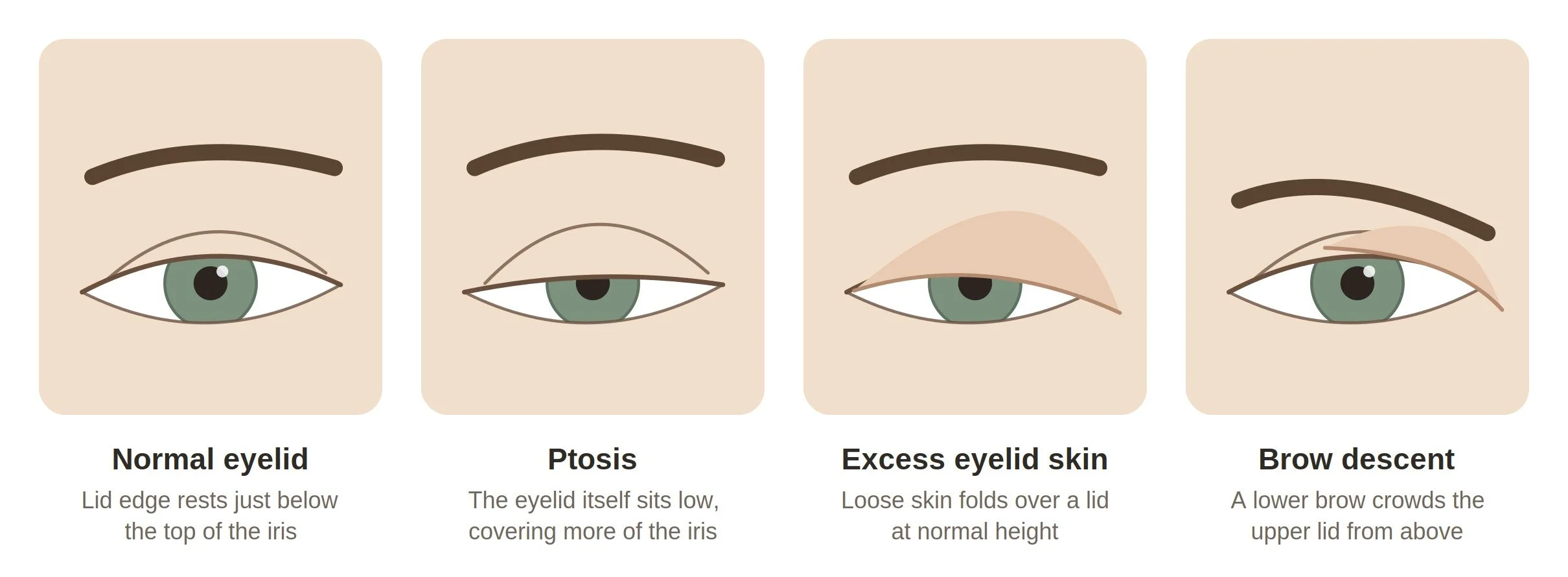
What is ptosis?
Ptosis (pronounced TOE-sis), also called blepharoptosis, is drooping of the upper eyelid itself: the edge of the lid rests lower over the eye than it should. It usually involves the levator muscle, the main muscle that lifts the upper eyelid, or the tendon that connects that muscle to the lid.
According to the American Society of Ophthalmic Plastic and Reconstructive Surgery (ASOPRS), ptosis in adults commonly develops as the levator tendon stretches with age. It can also follow eye surgery such as cataract surgery, an injury, or a muscle or nerve condition. People with ptosis may find it hard to keep their eyes open. They may also notice forehead strain from lifting their brows to compensate, or feel fatigued while reading.
When a droopy eyelid is urgent: Eyelid drooping that appears suddenly is a medical emergency, especially alongside double vision, headache, pupil changes, or facial weakness. Seek emergency care rather than scheduling a cosmetic consultation.
What is excess eyelid skin (dermatochalasis)?
Dermatochalasis is the medical term for loose, excess upper eyelid skin that folds toward or over the lashes. It is a common reason people describe their eyes as "hooded." The eyelid itself may sit at a normal height while the extra skin hangs over it.
ASOPRS notes that eyelid skin thins and loses elasticity over time, and that age, heredity, and sun exposure all contribute. Fat behind the eyelid can also push forward and add puffiness. When the extra skin rests on the lashes, it can create pseudoptosis: an eyelid that looks like it has ptosis even though the lid is in a normal position. In more advanced cases, the overhanging skin can block the upper and outer parts of a person's vision.
Can a low brow make your eyelids look droopy?
Yes. As the eyebrows descend with age, they can push skin and soft tissue down into the upper eyelid space, creating heaviness that looks like an eyelid problem.
This is called brow ptosis. Despite the similar name, brow ptosis is a different condition from eyelid ptosis: it describes the position of the brow, not the eyelid. It develops as the tissues supporting the brow lose volume and strength. People with a lowered brow often raise their eyebrows without realizing it, just to see comfortably.
The American Academy of Ophthalmology identifies brow position as a key part of evaluating excess eyelid skin. ASOPRS notes that when the brows have dropped, a brow procedure may be appropriate in addition to eyelid surgery. For more on that decision, see our guide to brow lift vs. upper eyelid surgery.
Ptosis repair vs. blepharoplasty: what's the difference?
Blepharoplasty cannot correct ptosis on its own. Blepharoplasty removes excess eyelid skin and sometimes fat, while ptosis repair addresses the levator muscle or tendon so the edge of the eyelid sits higher.
| Ptosis repair | Blepharoplasty | Brow procedure | |
|---|---|---|---|
| What it addresses | Eyelid edge sitting too low | Excess upper eyelid skin, sometimes fat | Lowered brow crowding the eyelid |
| Structure involved | Levator muscle or its tendon | Eyelid skin, and fat behind the eyelid | Brow tissues |
| What it won't correct on its own | Excess skin or a low brow | A low-sitting eyelid (ptosis) or a low brow | Ptosis or excess eyelid skin |
Many patients have more than one of these concerns. This table is a general comparison and can't determine which applies to you.
If ptosis is present and only the excess skin is removed, the eyelid can still sit low after surgery. When a patient has more than one condition, the surgeon may recommend addressing each. Your surgeon can explain whether that means one procedure or a combined plan.
How do ophthalmologists tell ptosis from excess eyelid skin?
A hands-on eyelid exam is the reliable way to tell these conditions apart, because they often overlap and can look alike in photos.
The American Academy of Ophthalmology describes what an evaluation typically includes:
Measuring how high the eyelid edge sits relative to the pupil.
Assessing levator function, meaning how far the eyelid travels from looking down to looking up.
Noting brow position, the amount of excess skin, and any fat pushing forward.
If vision is affected, visual field testing with the lids taped up, to measure how much the drooping tissue blocks.
An ophthalmologist also watches for signs that ptosis may be linked to a nerve or muscle condition that needs further care. That functional perspective is one reason an ophthalmic surgeon's evaluation can be useful when the cause of drooping isn't obvious.
Considering an eyelid evaluation in Wichita?
If your eyelids feel heavy, make you look tired, or seem to crowd your vision, an evaluation can clarify the cause before you make any decisions. At BE Aesthetics, Dr. Burgoyne and the clinical team review the eyelid, the brow, and your goals together. The aim is a plan built around your anatomy that looks natural and suits your features. You can also view eyelid surgery before-and-after results from BE Aesthetics patients.
Schedule an eyelid consultation today.
BE Aesthetics | 9300 E. 29th Street North, Suite 315, Wichita, KS 67226 | 316-425-9925
Frequently asked questions
Can one eyelid droop more than the other?
Yes. Ptosis can affect one eye or both, and excess skin and brow position are often uneven too. Noticeable asymmetry is worth mentioning during an evaluation.
Is eyelid surgery ever considered medical rather than cosmetic?
It can be. Upper eyelid surgery may be considered functional when drooping tissue significantly blocks vision, such as when reading or driving. Insurers typically require documented testing such as visual field exams, and coverage depends on your specific plan.
Can Botox or filler lift a droopy eyelid?
Injectables cannot correct ptosis or remove excess eyelid skin. For some patients with mild brow descent, carefully placed neuromodulator injections may slightly raise the brow, though this is an off-label use rather than an FDA-approved indication. Eyelid and brow drooping are also listed side effects of Botox Cosmetic in its FDA labeling, one reason treatment around the eyes calls for an experienced injector. A provider can tell you whether your concern is structural.
Should I see an ophthalmologist for droopy eyelids?
Ophthalmologists and plastic surgeons both perform eyelid surgery. Because ptosis can sometimes be connected to nerve or muscle conditions, an evaluation that includes eyelid function is especially useful when the cause isn't clear.
Do children get ptosis?
Yes. Ptosis present at birth is called congenital ptosis. A child with a drooping eyelid should be seen promptly by an eye doctor, ideally a pediatric ophthalmologist, because a low lid can interfere with visual development.