
Do I Need Eyelid Surgery?
7 Signs You May Be a Good Candidate for Blepharoplasty
The eyes often show age-related changes before the rest of the face. Loose upper-eyelid skin, persistent puffiness, or under-eye bags can make you look tired even when you feel well. In some cases, excess skin can also interfere with peripheral vision. Eyelid surgery, also called blepharoplasty, may address selected concerns by removing or repositioning excess skin and fat around the upper lids, lower lids, or both.
The American Society of Plastic Surgeons describes good candidates as generally healthy nonsmokers with realistic goals and no serious eye condition. Candidacy is still individual: an in-person examination is needed to identify what is causing the concern and whether surgery is appropriate. The following seven signs can help you decide whether to schedule that conversation.
1. Your upper eyelids feel heavy or look hooded
Hooded eyes can be a natural feature, but they may become more pronounced as skin loses elasticity. If upper-eyelid skin folds over the natural crease, eye makeup may transfer or disappear and the eyes may appear smaller. Upper eyelid surgery can remove a carefully measured amount of excess skin and, when appropriate, address bulging fat. Having hooded eyes alone does not mean you need surgery. The important questions are whether the change bothers you, what is causing it, and whether treatment can safely support your goals.
2. Eyelid skin is beginning to affect your field of vision
Excess upper-eyelid skin may hang low enough to reduce upper or outer peripheral vision. You might notice difficulty reading, working at a computer, or seeing clearly without raising your eyebrows. An examination, photographs, and visual-field testing may help document the problem. Sudden eyelid drooping is different: seek prompt medical care, especially if it occurs on one side or with weakness, double vision, or a severe headache.
3. You look tired even when you are well rested
Persistent folds, puffiness, or shadows around the eyes can create tired looking eyes that do not reflect how you feel. Blepharoplasty may improve certain structural causes, but it cannot treat every contributor to a fatigued appearance. Skin quality, eyebrow position, allergies, fluid retention, pigmentation, and hollow tear troughs can all play a role. A thoughtful evaluation should identify the cause before recommending a procedure.
4. Your under-eye bags do not improve with sleep or skincare
Lower eyelid bags often develop as supporting tissues weaken and fat shifts forward. When puffiness remains despite rest and reasonable skincare, lower eyelid surgery may be an option. Depending on your anatomy, a surgeon may reposition or remove fat and address loose skin. Temporary swelling from allergies, diet, illness, or lack of sleep should be evaluated before assuming surgery is the answer.
5. You have loose lower-eyelid skin or a visible lid-to-cheek transition
Lower-eyelid aging is not limited to bags. Fine wrinkles, lax skin, or a pronounced groove between the lower lid and cheek may also create an aged or shadowed appearance. Surgery can improve selected concerns, but it will not erase every wrinkle or correct all discoloration. Your surgeon may discuss blepharoplasty alone or a tailored combination of surgical and nonsurgical options.
6. You are healthy enough for surgery and prepared to follow recovery instructions
A good candidate is generally in good overall health, does not smoke, and has no uncontrolled condition that could interfere with healing. Eye conditions, dry-eye symptoms, thyroid disease, diabetes, bleeding problems, and all medications or supplements should be discussed openly. If you are considering surgery for droopy eyelids, the cause matters: true eyelid ptosis, a low eyebrow, and excess skin are different problems and may require different procedures.
7. You have specific, realistic goals
Blepharoplasty can help the eye area look more open, rested, and refreshed, but it does not stop aging or make both sides perfectly identical. Strong candidates understand the likely benefits, limitations, recovery period, and potential risks. They are choosing surgery for themselves, not to satisfy someone else, and can describe the changes they hope to see without expecting a completely different appearance.
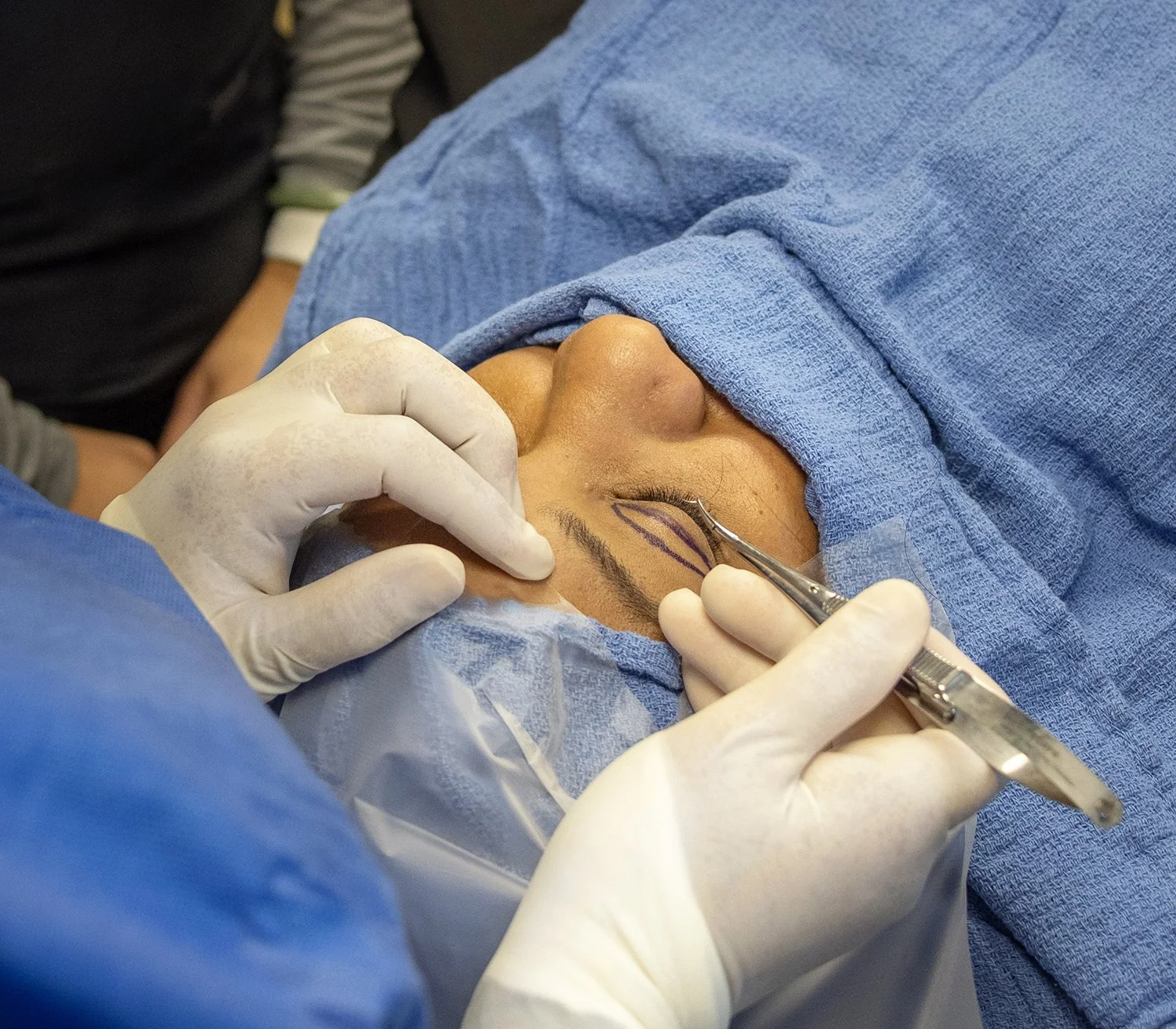
Upper vs. lower eyelid surgery: what is the difference?
Upper blepharoplasty primarily treats excess upper-lid skin and selected fat deposits; it may be cosmetic, functional, or both. Lower blepharoplasty focuses on lower eyelid bags, bulging fat, and sometimes loose skin. Some patients benefit from treating both areas, while others need a different procedure, such as ptosis or brow repair, or no surgery at all. The recommendation should follow a full assessment of your eyelids, brows, eye health, medical history, and goals.
What a careful eyelid evaluation should include
A thoughtful consultation should go beyond looking at excess skin. The clinician should review your eye symptoms, medical history, medications, previous procedures, brow position, eyelid function, skin and fat distribution, and goals. When comparing an eyelid surgeon in Wichita, ask about relevant training, board certification, experience with upper and lower eyelid procedures, and the accreditation of the surgical facility. Review before-and-after photographs of patients with concerns similar to yours.
You should also receive a clear explanation of the recommended technique, anesthesia, recovery, alternatives, expected result, costs, and risks. Potential complications include dry eye, temporary blurred vision, difficulty closing the eyes, asymmetry, scarring, bleeding, infection, and the possible need for revision. Rare but serious complications can occur. A qualified surgeon should explain how these risks apply to you rather than relying on a one-size-fits-all description.
Common questions about blepharoplasty candidacy
Can eyelid surgery help hooded eyes?
It may help when excess upper-eyelid skin is the primary cause. If eyebrow descent or true eyelid ptosis is contributing, blepharoplasty alone may not provide the intended correction.
Does insurance cover upper eyelid surgery?
Coverage varies. A plan may consider surgery medically necessary when documented eyelid skin obstructs vision, but cosmetic treatment is generally not covered. Ask your insurer about its criteria, testing, photographs, referrals, and prior-authorization requirements.
How long does recovery take?
Recovery varies by procedure and patient. Swelling and bruising are expected early, and the final result develops as healing continues. Follow the operating surgeon’s instructions about eye care, medications, activity, driving, contact lenses, and returning to work.
Is it time to schedule an eyelid surgery consultation?
If one or more of these signs sounds familiar, a consultation can help separate normal anatomy from a treatable cosmetic or functional concern. Bring a list of medications and supplements, describe any dry-eye or vision symptoms, and be ready to discuss what you would like to change. An experienced eyelid surgeon can explain whether blepharoplasty, another treatment, or observation is the safest and most appropriate next step.
Schedule a personalized eyelid surgery evaluation in Wichita to learn which options may fit your needs. Results and candidacy vary, and consultation is required before treatment.