
Medically reviewed by Jennifer Burgoyne, M.D., Board-Certified Ophthalmologist & Surgeon, BE Aesthetics, Wichita, KS
Sometimes. Insurance may cover eyelid surgery when excess upper eyelid skin, a drooping eyelid, or a low brow is blocking your vision and testing documents it. When eyelid surgery is done only to change how the eyes look, it is considered cosmetic and is not covered.
What matters is not just which procedure you have, but why you need it. The American Society of Plastic Surgeons notes that whether eyelid surgery counts as cosmetic or reconstructive depends on a patient's signs and symptoms, not on the procedure code alone. That is why a careful exam comes before any conversation about coverage.
At BE Aesthetics in Wichita, eyelid surgery is led by Jennifer Burgoyne, M.D., a Board-Certified Ophthalmologist who has practiced surgical eye care in Wichita since 2001. Because she evaluates the eyelids from both a medical and an aesthetic perspective, one consultation can answer two questions: what is causing the heaviness, and whether it is affecting your vision.
Below, we explain what makes eyelid surgery "functional," what insurers typically look for, and why late fall is a practical time to start the conversation.
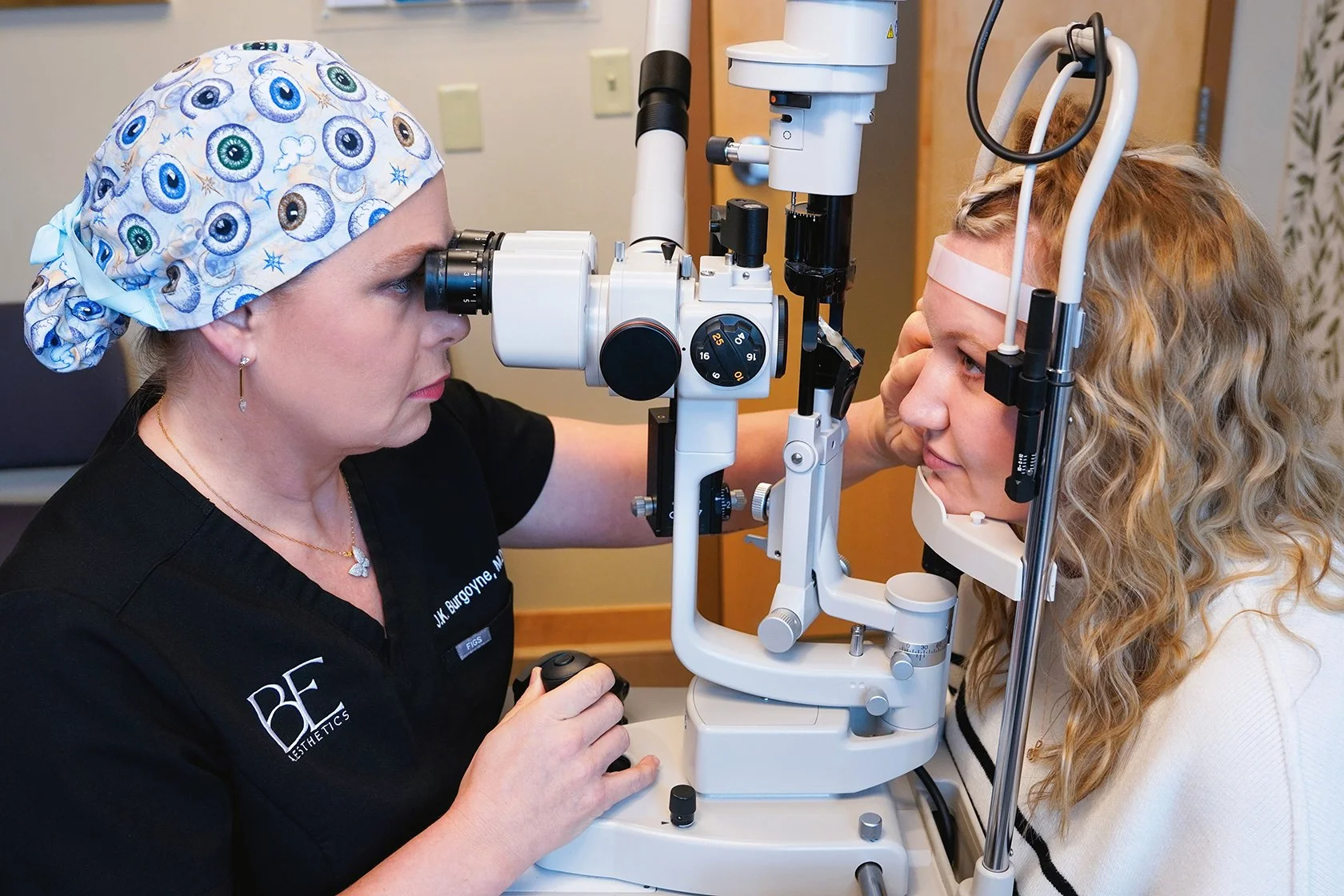
What is the difference between functional and cosmetic eyelid surgery?
Functional eyelid surgery treats an eyelid problem that interferes with your vision or with how the eyelid works. Cosmetic eyelid surgery changes how the eyes look when no functional problem is present. The same operation can fall into either category, or both.
The most common procedure in both categories is upper blepharoplasty, which removes or repositions excess upper eyelid skin, muscle, or fat. Ptosis repair is different: it tightens or repositions the tissue that lifts the eyelid itself. Either one can be functional when the eyelid position or extra tissue measurably blocks your sight.
Is the heaviness from excess skin, ptosis, or my brow?
Heavy upper eyelids usually come from one of three sources, and many patients have more than one. Each is treated differently, which is why the cause matters before choosing a procedure.
| Concern | What it means | How it is typically addressed |
|---|---|---|
| Excess upper eyelid skin (dermatochalasis) | Skin loses elasticity with age and can fold down over the lashes | Upper blepharoplasty |
| Ptosis (blepharoptosis) | The eyelid itself sits too low because the muscle system that lifts it is weakened or not working properly | Ptosis repair |
| Brow ptosis | A low brow pushes tissue down onto the upper eyelid | Brow lift, sometimes combined with eyelid surgery |
These concerns can look alike. The American Society of Plastic Surgeons describes "pseudoptosis," where excess skin hangs over the pupil even though the eyelid edge itself sits well above it. Telling these apart is a core part of an eyelid surgeon's exam, and it shapes both the surgical plan and how a case is documented for insurance.
“Excess eyelid skin and ptosis are two different conditions. Excess skin can hang over the lashes and affect vision, while ptosis occurs when the upper eyelid itself sits too low. During an exam, I evaluate the eyelid position and excess skin to determine which condition is present and what treatment may be appropriate.”
— Jennifer Burgoyne, M.D.
For more on telling these apart, see our guide to droopy eyelids: ptosis, excess skin, or a low brow.
When does insurance cover eyelid surgery?
Insurance generally covers eyelid surgery when it is medically necessary, most often when upper eyelid tissue or a low brow blocks part of your field of vision. Each insurer sets its own criteria, and many require testing and prior authorization before surgery.
Medicare's coverage policy for Kansas describes the kinds of functional complaints that can qualify, such as eyelids interfering with vision, trouble reading, or brow fatigue from constantly raising the eyebrows to see. The same policy also recognizes a few less common reasons, including chronic skin irritation (dermatitis) caused by redundant eyelid skin and difficulty wearing an eye prosthesis.
What does Medicare look for in Kansas?
In Kansas, Medicare's eyelid surgery policy, administered by Wisconsin Physicians Service, looks for documented functional complaints plus measurable findings: eyelid position measurements, visual field testing, or both.
Under the current policy, findings that can support coverage include:
Eyelid position. A margin reflex distance of 2.5 mm or less. This measures the space between the center of the pupil and the edge of the upper eyelid.
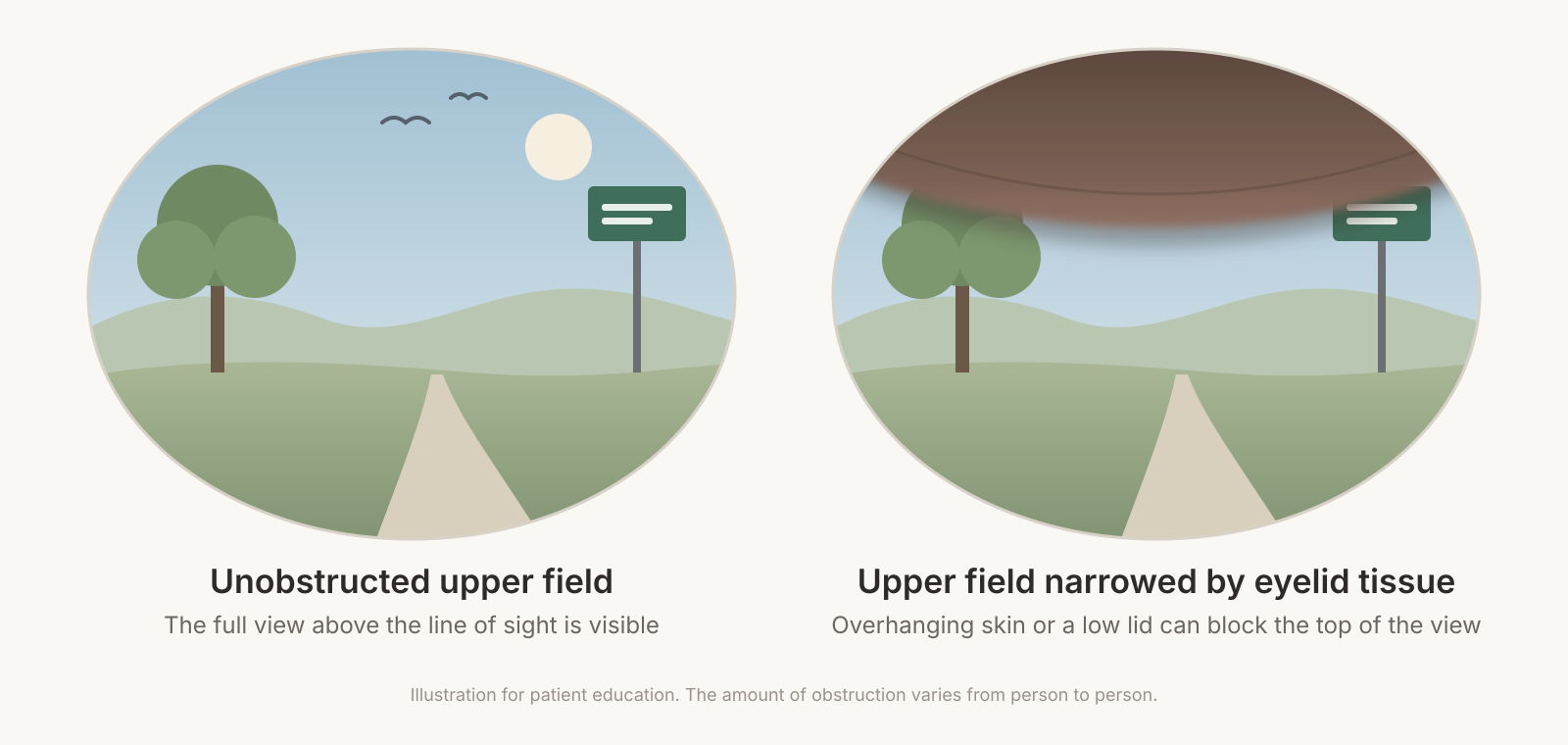
Visual field improvement. A difference of at least 12 degrees, or 30 percent, in the upper field of vision when the eyelids or brow are lifted during testing.
Medicare Advantage and private insurance plans may use their own criteria and prior-authorization steps. Your plan documents or insurer can confirm what your specific plan requires.
What is a visual field test for eyelid surgery?
A visual field test measures how much of your surrounding vision you can see. For eyelid surgery, it is typically done twice: once with the eyelids in their natural position and once with them gently taped up, to show how much vision the eyelid tissue is blocking.
The American Society of Plastic Surgeons recommends that this testing be performed by an ophthalmologist or optometrist. Insurers may also request photographs of the eyelids from several angles as part of the documentation.
“One of the most common questions I hear is whether insurance will cover eyelid surgery. If drooping eyelids or excess skin are interfering with your vision, surgery may be considered medically necessary. We perform an evaluation, including measurements and visual field testing when appropriate, to determine whether you may meet your insurance company’s requirements.”
— Jennifer Burgoyne, M.D.
Does insurance cover lower eyelid surgery for under-eye bags?
Usually not. Lower eyelid surgery for under-eye bags or puffiness is generally considered cosmetic, because those concerns do not typically block vision. As with any eyelid procedure, coverage depends on documented functional signs, so your surgeon can tell you whether your situation is an exception.
Can I combine insurance-covered and cosmetic eyelid surgery?
Often, yes. Some patients have a functional upper eyelid concern and also want a cosmetic improvement, such as lower eyelid rejuvenation. In that case, only the medically necessary portion may be submitted to insurance, and the cosmetic portion is self-pay.
The American Society of Plastic Surgeons is clear that surgery done purely for appearance should not be billed to insurance. Being transparent about which part is which protects you during the authorization process. For the self-pay portion, BE Aesthetics offers payment plans for cosmetic procedures.
Why do many patients schedule eyelid surgery before the end of the year?
Deductibles and out-of-pocket maximums apply per plan year. If you have already met yours, covered surgery completed before your plan year resets may cost you less out of pocket than the same surgery after it resets.
Medicare's Part B deductible, for example, is paid once each year. Many other plans follow their own 12-month plan year, which may not line up with the calendar year, so check your plan documents or ask your employer when yours begins. Because testing and prior authorization take time, starting the conversation in November leaves more room than waiting until late December.
Recovery is worth planning around, too. According to MedlinePlus from the National Institutes of Health, stitches are typically removed within 5 to 7 days, and bruising can last 2 to 4 weeks. If you have holiday gatherings or travel on the calendar, ask about timing during your consultation.
What should I bring to an eyelid surgery consultation?
Bringing a few things to your first visit helps the evaluation and any insurance steps move more smoothly:
Your insurance card and, if possible, your plan's details on deductibles and prior authorization
A list of your current medications, including blood thinners and supplements
Any history of dry eye, thyroid disease, or prior eye or eyelid surgery
A short description of when the heaviness bothers you most, such as reading, driving, or late in the day
Records from a recent eye exam, if you have them
Does BE Aesthetics accept insurance for eyelid surgery?
Insurance-covered eyelid procedures are handled through ICT Eye, which accepts hundreds of insurance carriers. When you call to schedule, our team will talk with you about your concerns and help decide whether BE Aesthetics or ICT Eye is the right place to start. Cosmetic eyelid surgery is offered at BE Aesthetics as a self-pay procedure, with payment plans available.
How does BE Aesthetics evaluate eyelid concerns?
BE Aesthetics is a surgeon-led medical aesthetics clinic in Wichita, Kansas, and eyelid surgery is one of its central areas of expertise. Dr. Burgoyne's background as a Board-Certified Ophthalmologist means an evaluation considers how your eyelids function as well as how they look.
Because the practice offers both surgical and non-surgical care, the conversation does not have to end with surgery. For some patients, a heavy or tired look is not structural, and the team can explain when another option may be worth discussing. For others, the concern is anatomical, and surgery is the more direct path.
Considering eyelid surgery in Wichita?
If heavy upper eyelids are getting in the way of reading, driving, or seeing comfortably, an evaluation is a practical first step. At BE Aesthetics, Dr. Burgoyne can determine what is causing the heaviness, whether ICT Eye may be the right place to start if insurance could apply, and which options fit your anatomy and goals.
Schedule an eyelid surgery consultation or call 316-425-9925. You can also learn more about eyelid surgery at BE Aesthetics and view eyelid surgery before-and-after results.
Frequently asked questions
Does insurance cover blepharoplasty in Wichita?
Insurance may cover blepharoplasty in Wichita when excess eyelid tissue measurably blocks your vision or causes another functional problem. Coverage depends on your specific plan. Insurance-covered eyelid procedures are handled through ICT Eye, and our team can help you decide where to start when you call to schedule.
Does Medicare cover ptosis repair?
Medicare may cover ptosis repair when a drooping eyelid causes a functional problem, such as blocked vision, and the findings are documented. In Kansas, Medicare's coverage policy lists specific eyelid measurements and visual field criteria.
Will insurance cover eyelid surgery if my eyes just look tired?
No. A tired appearance on its own is considered a cosmetic concern. Coverage requires a functional problem, such as eyelid tissue blocking your vision, confirmed by an exam and testing.
How long does recovery from eyelid surgery take?
According to MedlinePlus, stitches are typically removed within 5 to 7 days, and bruising can last 2 to 4 weeks. Recovery varies by procedure and patient, so your surgeon will give you specific instructions.
Can I still have eyelid surgery if insurance does not cover it?
Yes. Patients can choose eyelid surgery as a self-pay cosmetic procedure. BE Aesthetics offers payment plans for cosmetic procedures.
Does my deductible reset on January 1?
It depends on your plan. A plan year is a 12-month period that may not match the calendar year, so check your plan documents or ask your employer when your deductible resets.
This article is for general education. It is not a substitute for an individual medical evaluation or a coverage decision from your insurance provider.